A shorter route through a demanding task.
Grant writers and researchers work across dense funding calls, supporting documents and application rules. Vesphera aimed to help them turn that material into a first draft while keeping control of its structure and research content.
The workflow could take four to six hours. Our working estimate was that it could replace two weeks to a month of preparation and drafting, depending on the application. That is an estimate of potential time saved, rather than a measured average from the beta.
That shaped my design problem. Even a much shorter task still takes hours: the interface had to help a researcher understand where they were, judge the AI’s interpretation and know when to act.
Learning the domain while defining the interface.
As co-founder and product lead, I owned the work from early discovery through beta testing: research, MVP scope, interaction design, UI and developer delivery. I managed the development team, defined the product roadmap and prioritised features as we moved towards beta. I also recruited and onboarded early testers, bringing the product into conversations with researchers and grant-writing consultants.
I needed to learn the language of funding calls quickly enough to design around real requirements. The interface separated the call’s required structure from the researcher’s source material and the AI’s developing output. That distinction gave people concrete things to inspect at each stage.
A sequence of decisions people could follow.
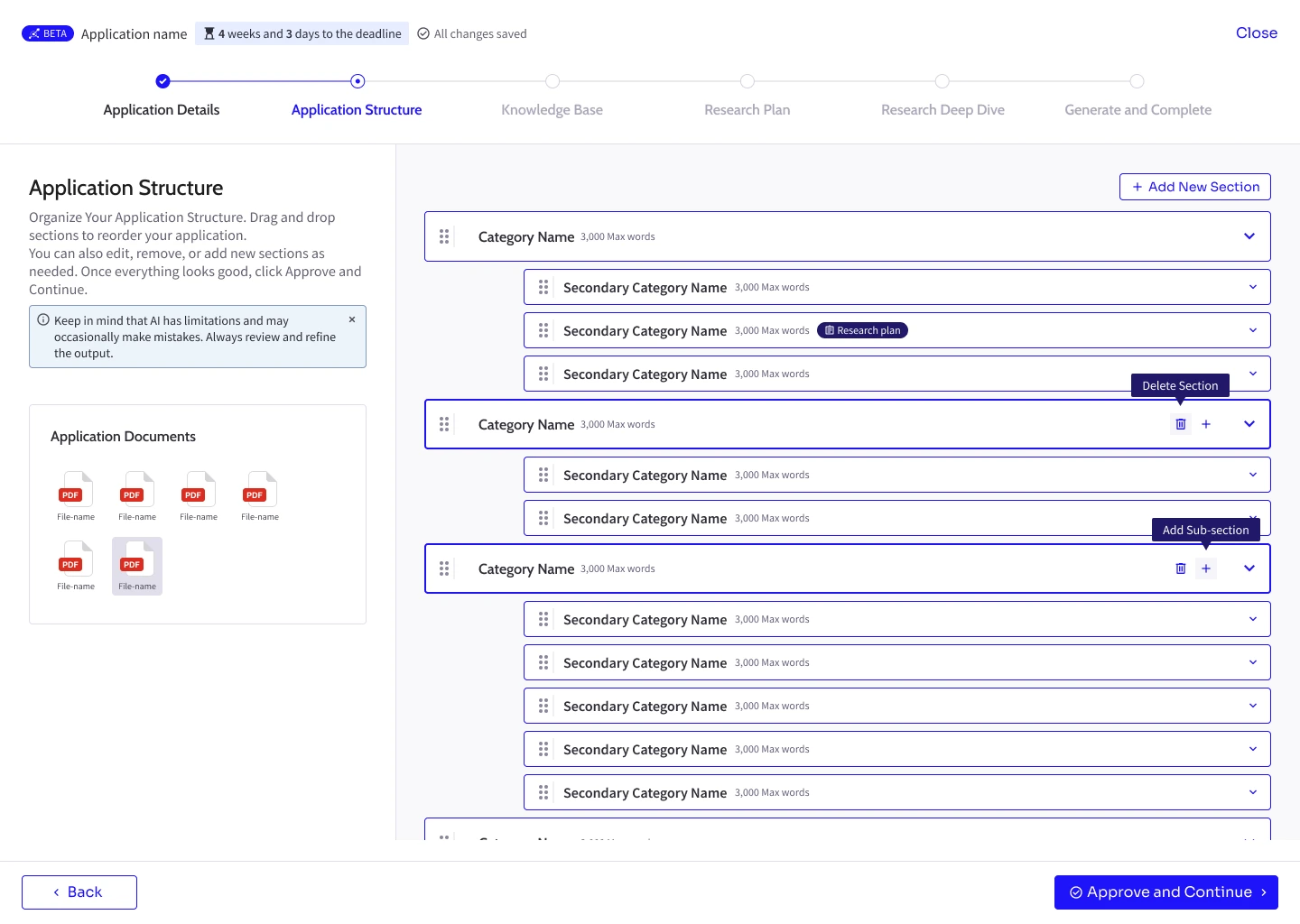
I organised the application journey into six visible stages. A persistent stepper showed completed, current and upcoming work. The application name, deadline and saved-state indicator stayed in the header, while Back and Approve and Continue gave each stage a consistent exit.
- 01Application details
- 02Application structure
- 03Knowledge base
- 04Research plan
- 05Research deep dive
- 06Generate and complete
The stepper explained the sequence. The content within each stage explained the decision: what the system had produced, what the researcher could change and what approval would allow next.
Review the interpretation before it becomes a draft.
The application-structure screen made the AI’s interpretation visible as sections and subsections. Researchers could reorder, edit, remove or add sections and inspect word limits. Supporting application documents remained alongside the outline.
I made approval an explicit action. A warning about AI mistakes was useful context, but the editable hierarchy provided the practical means to correct them. The researcher could examine the structure before letting later work depend on it.
Show the work at the level of the task.
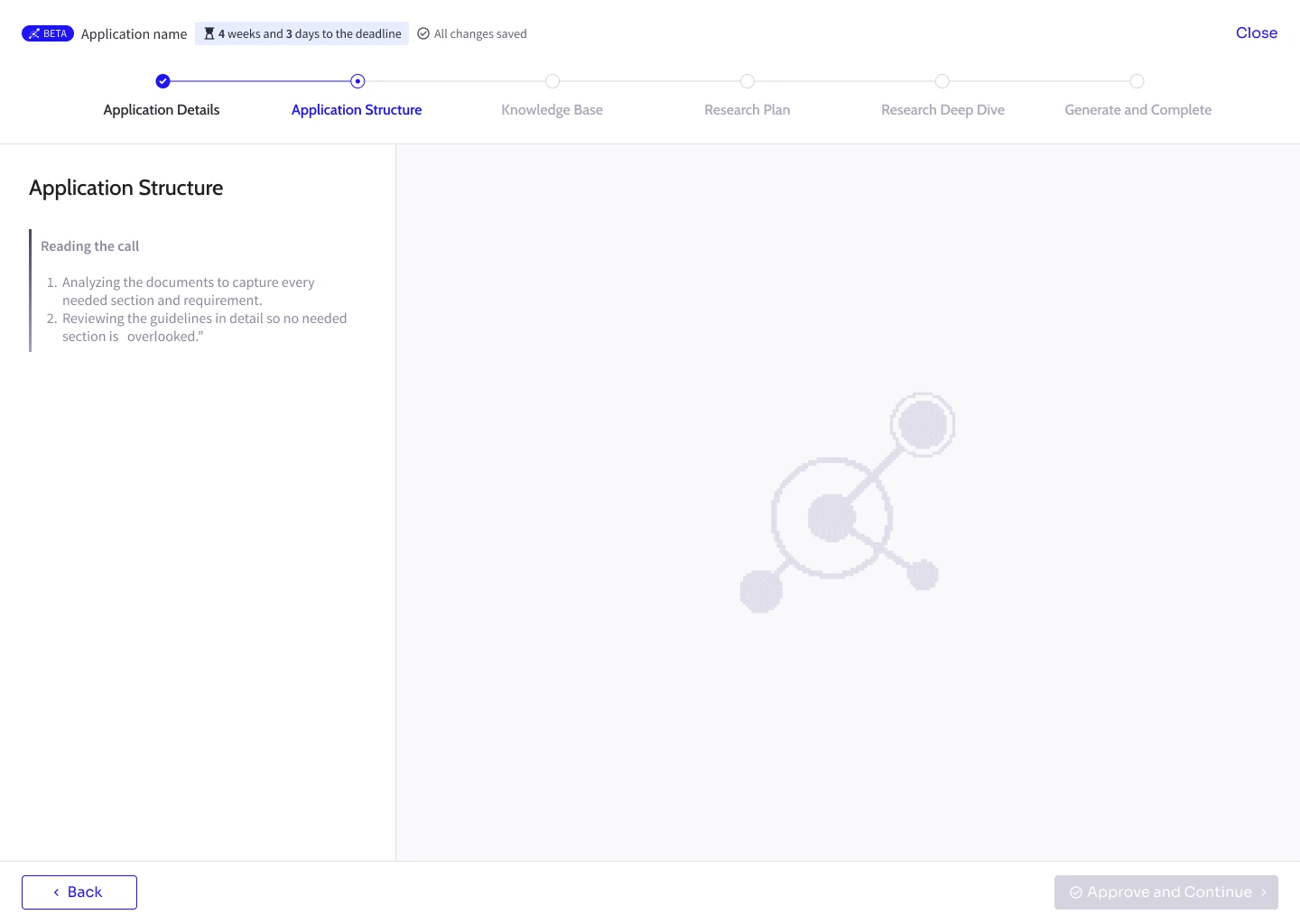
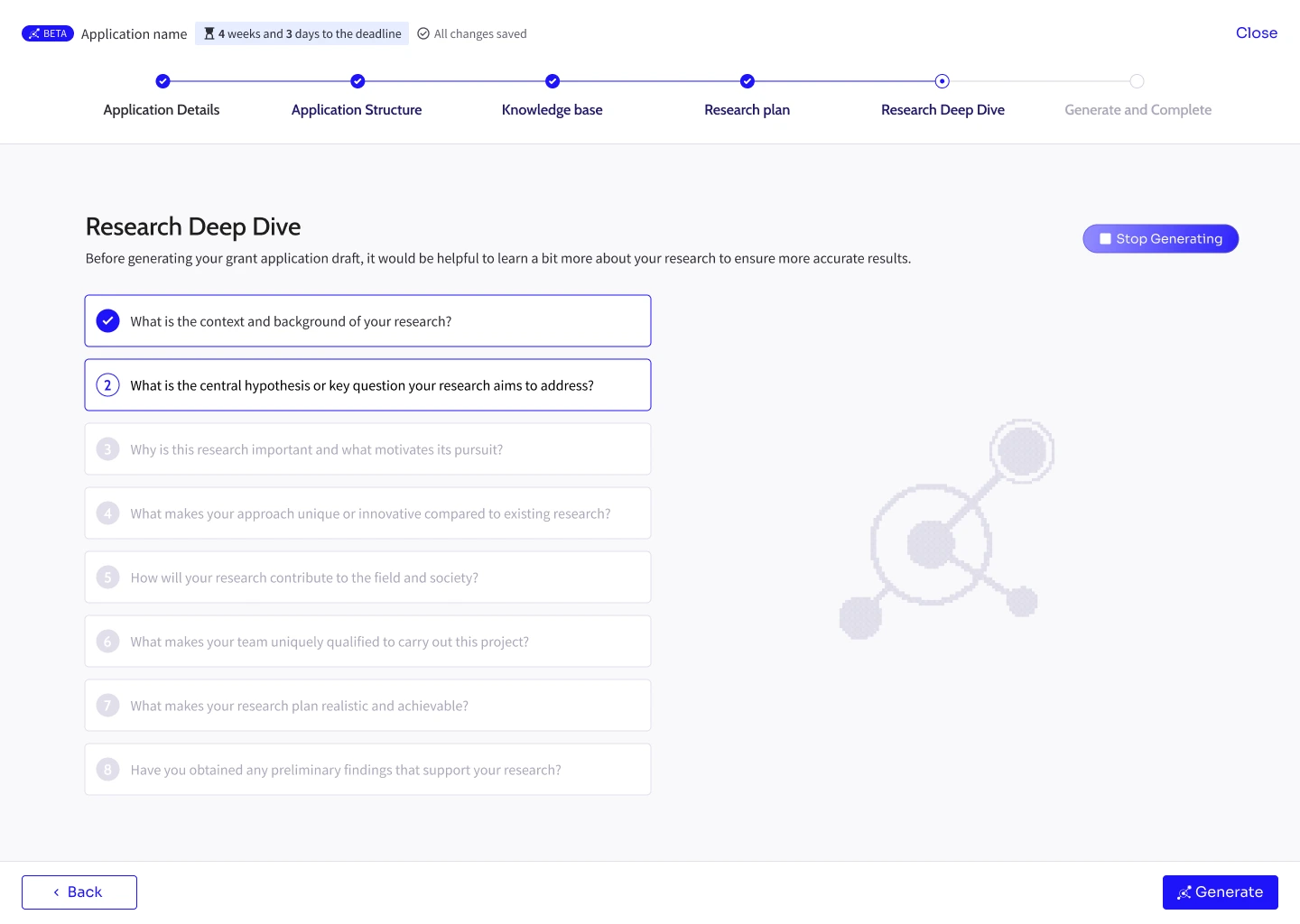
Reading a call is different from asking a researcher for more context. I gave those states different layouts. The structure-loading view describes document analysis and requirement checking. The Research Deep Dive view presents a list of research questions with completed, current and upcoming states, alongside a control to stop generation.
These are moments in a longer collaboration. They help the researcher see which part of the task is advancing and where their own knowledge will be needed.
Support the return to work.
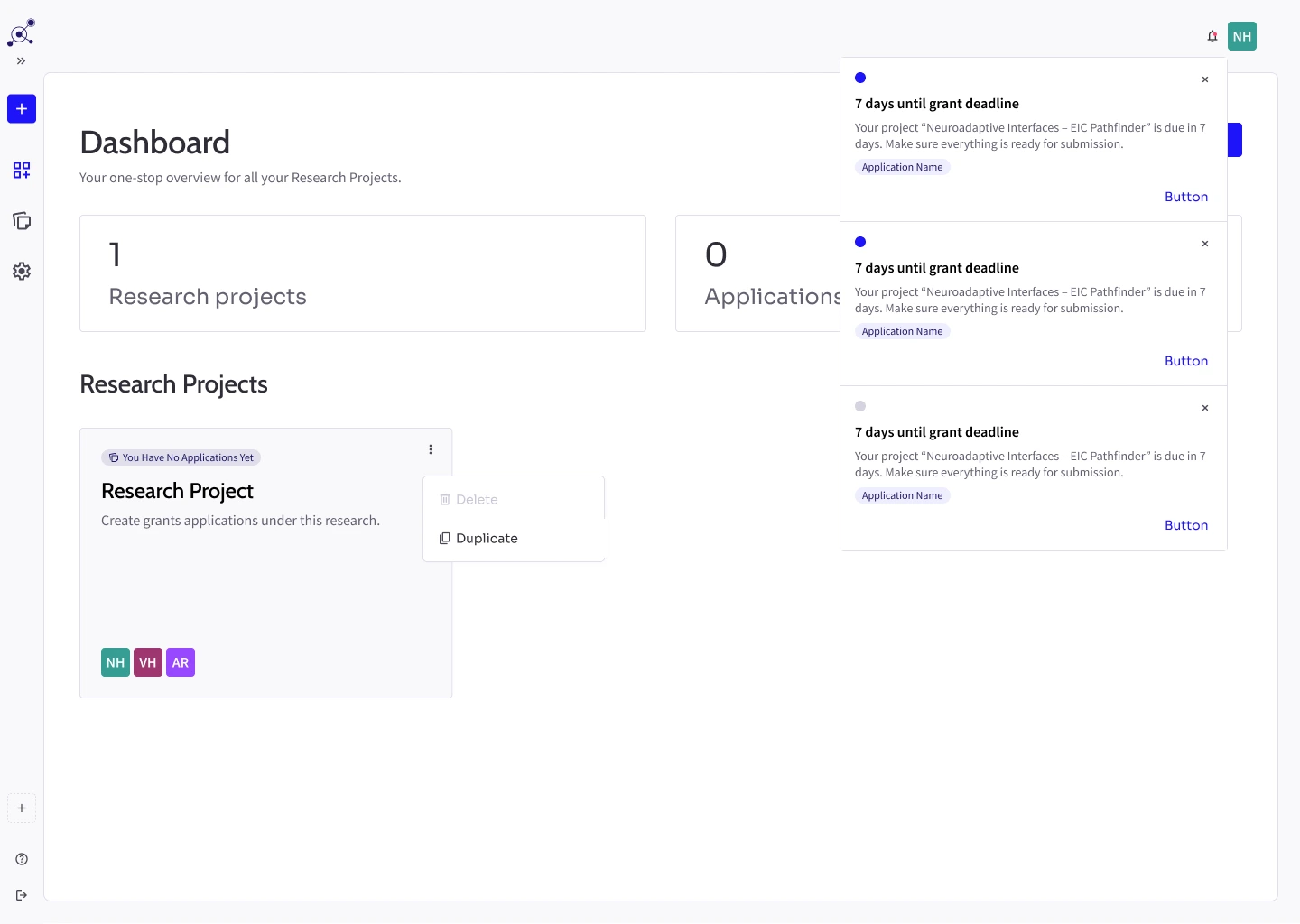
A multi-hour process needs a clear way to bring people back. I designed notifications as part of the wider experience, with status, application context and a route into the relevant work. The dashboard notification designs also included grant-deadline reminders.
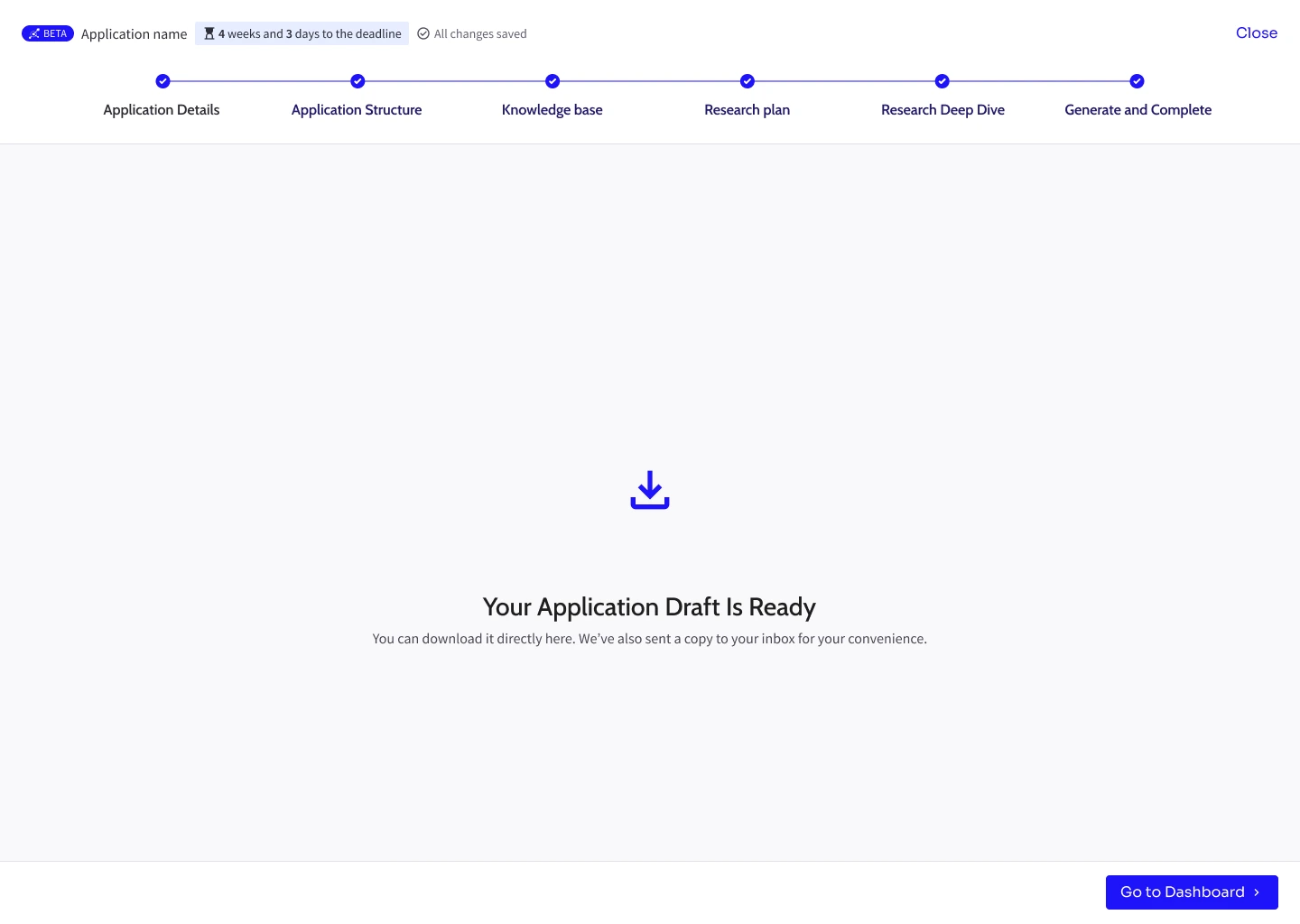
The beta completion design offered a direct draft download and told the researcher that a copy had also been sent to their inbox. It gave them a concrete handoff from generation back to their own review.
What reached beta, and what changed next.
Vesphera reached beta users. The Figma file contains both broader editor explorations and screens explicitly labelled “BETA without the editor”. The completion example here comes from that beta flow; these original design screens document the intended interaction, rather than proving that every explored feature shipped.
After significant advances in NotebookLM’s capabilities, we discontinued Vesphera. Several members of the team made a strategic pivot to X-Berg, originally built to support Vesphera’s need to process large volumes of documents accurately and quickly.
The experience sharpened my approach to long AI workflows: put review where it can still change the result, explain progress in the language of the user’s task, and make the next human action easy to find.
Continue to X-Berg